Bauhaus Lighting: Embracing Non-Chrome Trends
When you hear “Bauhaus lighting,” your mind probably jumps to sleek chrome and glass. And you’re not wrong – that’s a huge part of the movement’s iconic look. But here’s the thing: while chrome was a star player, it wasn’t the only material in the Bauhaus playbook. In fact, many designers were exploring alternatives, especially as the movement evolved and materials became more readily available or, conversely, less available due to economic shifts. So, if you’re looking to embrace a more nuanced, less-expected Bauhaus aesthetic in your lighting, you’ve got plenty of historical precedent to draw from beyond the shiny stuff.
The Bauhaus was all about function, mass production, and a new aesthetic for the modern age. While chrome fit perfectly into this vision – it was industrial, durable, and reflected light Oneons beautifully – its dominance wasn’t absolute. Several factors led designers to look beyond it.
Material Availability and Cost
In post-WWI Germany, resources could be tight. While steel was gaining prominence, other, more readily available or less expensive materials were often utilized, especially for early prototypes or smaller production runs. Think about the economic realities of the time; a designer might have simply had easier access to brass or painted metal sheets than to extensively chrome-plated components.
Evolving Aesthetic Sensibilities
As the Bauhaus matured, so did its aesthetic. While the early days were often characterized by a stark, almost austere functionality, later periods saw a subtle softening, a greater emphasis on color, and a broader exploration of textures. Chrome, for all its brilliance, can be quite cold. Other materials offered warmth, different reflective qualities, or simply a different visual weight that some designers found appealing.
Influence of Craft and Industrial Techniques
The Bauhaus famously bridged craft and industry. While industrial processes were paramount, the hand of the artisan was never fully discarded. Different materials lent themselves to different crafting techniques – spinning, bending, punching – which could be done with a variety of metals, not just those destined for a chrome finish.
Brass and Copper: Warmth and Patina
If you’re steering clear of chrome but want to retain that metallic touch, brass and copper are your best friends in the non-chrome Bauhaus world. They offer a completely different visual and tactile experience.
Historical Context of Brass and Copper
Before the widespread adoption of chrome plating, brass was a workhorse metal in lighting. It was durable, malleable, and took a good polish. Copper, with its distinct reddish hue, also found its way into designs. Both metals were relatively common and could be worked with existing tools and techniques. Designers didn’t just stumble upon them; they were conscious choices.
Distinctive Visual Characteristics
- Brass: Offers a warm, golden glow. It can be polished to a high shine, brushed for a matte finish, or left to develop a natural patina over time, which adds character and depth. This patina can range from dark brown to a greenish-black, depending on the environment.
- Copper: Provides a rich, reddish-brown color that darkens with age. Like brass, it can be polished or allowed to oxidize, resulting in beautiful verdigris effects. The natural oxidation process of these metals tells a story, a concept that subtly aligns with the Bauhaus emphasis on honest materials and how they age.
Examples in Bauhaus Design
While less ubiquitous than chrome, examples exist. Think of certain early prototypes or less common variations of famous designs. Even Marcel Breuer’s furniture sometimes featured brass components before chrome became the standard. The inherent warmth of these metals offered a softer alternative to the starkness of chrome. Imagine a Wagenfeld lamp with a brass base – it still maintains the clean lines and functional form but with a decidedly different feel.
Painted and Enameled Metals: Color and Durability
Perhaps the most direct and impactful way Bauhaus designers embraced non-chrome trends was through the use of painted and enameled metals. This wasn’t just about covering up a cheaper material; it was often a deliberate design choice that brought color, durability, and a specific texture to the fore.
The Role of Color in Bauhaus
While often associated with black, white, and primary colors, the Bauhaus used color thoughtfully and intentionally. It wasn’t merely decorative; it served a function – to define planes, highlight elements, or create visual hierarchy. Painted metal allowed designers to integrate specific color palettes directly into their lighting fixtures.
Types of Finishes
- Painted Steel/Aluminum: This was a practical choice. Steel and aluminum could be easily formed and then painted in a range of colors. Matte finishes were common, offering a subdued, functional look, but gloss finishes also appeared, particularly when a more reflective or industrial sheen was desired. The durability of paint varied, but advancements were constantly being made.
- Enameled Metal: Enameling involves fusing a glass-like coating to a metal surface at high temperatures. This creates an extremely durable, hard, and often glossy finish that is resistant to scratches and corrosion. It was a more complex and costly process than simple painting but offered superior longevity and a distinct aesthetic. The sheen of enamel could vary from subtly eggshell to high gloss.
Notable Examples and Impact
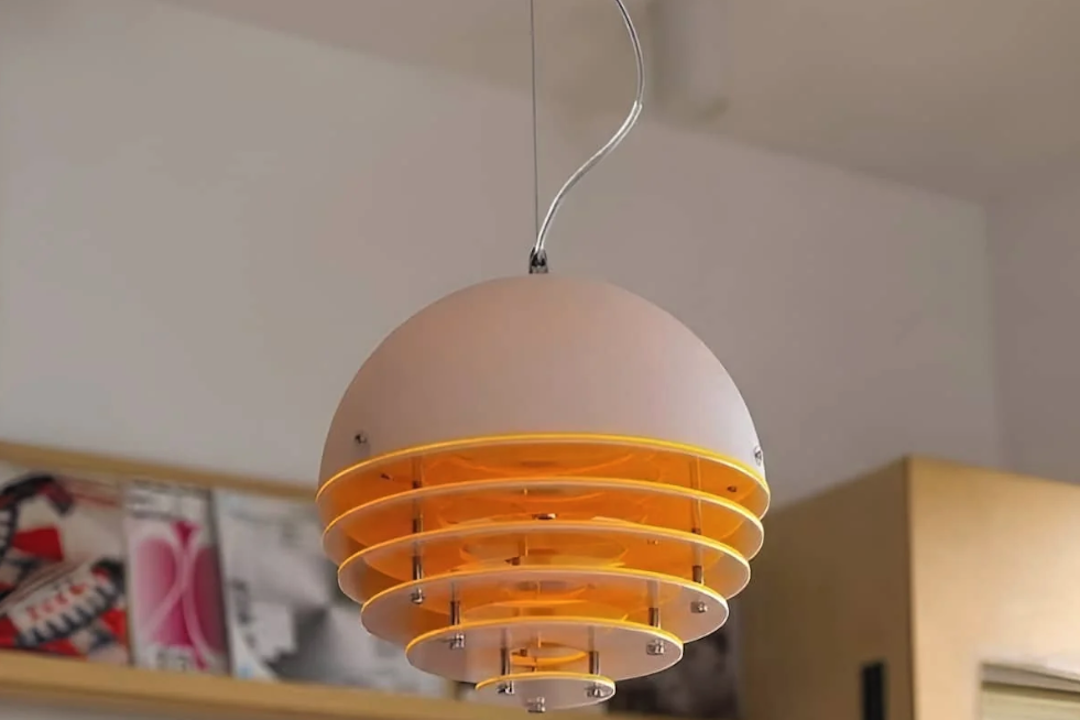
Grete Lihotzky’s Frankfurt Kitchen, though not solely about lighting, showcased a profound use of painted metal for functionality and hygiene. In lighting, many designs featured painted shades or bases. Think of ceiling lamps with spun metal shades painted in cream, black, or even a subtle grey-blue. These pieces retain the clean lines and functional aesthetic of Bauhaus but soften the industrial edge with a touch of color and a different textural quality. The ability to color-code or integrate fixtures into a broader interior scheme through paint was a powerful tool for designers.
Wood and Bakelite: Organic Touches and Early Plastics
While metal was king, Bauhaus designers weren’t afraid to introduce other materials that offered different properties, textures, and even a hint of warmth. Wood and early plastics like Bakelite found their way into lighting, often as subtle accents or structural components.
Wood’s Place in Modernism
Despite the emphasis on industrial materials, wood never entirely disappeared from modernist design. It offered warmth, a natural texture, and could be manipulated with traditional crafting techniques. In lighting, it might appear as a base, a handle, or even integrated into a shade structure, providing a contrast to the metallic elements.
Bakelite: The Revolutionary Plastic
Bakelite, patented in 1907, was one of the first truly synthetic plastics. It was durable, heat-resistant, electrically non-conductive, and could be molded into complex shapes. For lighting, this made it an ideal material for switches, sockets, and even entire lamp bases.
Material Characteristics and Use Cases
- Wood: Often used in its natural state, sometimes stained or lacquered. It brought an organic element to otherwise industrial designs. Its insulating properties were also useful for certain electrical components.
- Bakelite: Typically black or dark brown, Bakelite had a distinct, smooth, almost glossy finish. Its strength and heat resistance made it perfect for functional parts that needed to withstand wear and tear. It allowed for mass production of consistent, complex forms.
Blending Materials for Function and Form
The beauty of incorporating wood or Bakelite was how they contrasted with metal. A polished metal shade might be paired with a warm wooden base, or a minimalist metal arm could terminate in a crisp Bakelite switch. This blending showcased the Bauhaus principle of using the right material for the right function, and often, these materials offered a visually softer, more tactile experience than pure chrome.
Glass Varieties Beyond Clear: Diffused Light and Texture
When we think of Bauhaus lighting, clear glass often comes to mind, showcasing the bulb and the internal mechanics. But designers also explored a range of other glass types to achieve different lighting effects and aesthetic qualities.
The Purpose of Glass in Lighting
Glass, in Bauhaus lighting, wasn’t just a protective cover; it was an integral part of the light’s function. It shaped the light, diffused it, and sometimes even became a sculptural element in itself. While clear glass allowed for maximum light output and an unadorned view of the bulb, other types offered different benefits.
Exploring Non-Clear Glass Options
- Opal Glass: This translucent, milky-white glass was a popular choice. It diffused light beautifully, reducing glare and creating a soft, even glow. This was particularly important for general illumination where harsh direct light wasn’t desired. It also provided a more uniform, often spherical, visual form without revealing the bulb itself.
- Frosted Glass: Similar to opal glass, frosted glass also diffuses light but often has a more textured, matte appearance. It could be achieved through acid etching or sandblasting. It offered a similar glare-reducing effect but with a slightly different visual quality.
- Smoked or Tinted Glass: While less common than opal or frosted, some designs incorporated smoked or tinted glass to create specific atmospheric effects or to subtly alter the color of the light emitted. These were often used in more specialized applications or for accent lighting.
Impact on Light Quality and Aesthetics
The choice of glass profoundly impacted both the light quality and the overall aesthetic of the fixture. Opal or frosted glass created a much softer, more inviting ambiance than stark clear glass. It allowed the light source to become a more integrated, less aggressively exposed element of the design. This demonstrates the Bauhaus commitment to considering not just the form of the object, but also its interaction with its environment and its user. A lamp with an opal globe provided a universally pleasant illumination, aligning with the movement’s goal of creating functional and humane objects for modern living.
Incorporating Non-Chrome Bauhaus into Modern Interiors
So, how do you take these historical insights and apply them to your contemporary space without it looking like a museum exhibit? It’s all about thoughtful integration and appreciation for the nuanced aesthetic.
Blending Old and New
The beauty of non-chrome Bauhaus elements is their ability to blend. A brass-accented lamp can feel both classic and modern. A painted metal pendant can introduce a subtle pop of color and texture without dominating the room. These pieces often have a softer edge than their chrome counterparts, making them easier to integrate into diverse interior styles, from minimalist to industrial to even more eclectic settings.
Emphasizing Texture and Warmth
If your space leans towards a lot of cool tones or slick surfaces, introducing non-chrome Bauhaus lighting can inject much-needed warmth and textural interest. The patina of brass, the matte finish of painted steel, or the milky glow of opal glass can soften a room and create a more inviting atmosphere.
Thoughtful Material Pairing
Consider how your lighting choices interact with other materials in your room. A wooden floor might be complemented by a brass lamp, or a concrete wall could be softened by a fixture with a painted enamel finish. The goal is harmony and intentional contrast, not a jarring clash.
A Nod to Authenticity and Individuality
Choosing non-chrome Bauhaus lighting is a way to express a deeper understanding and appreciation for the movement’s breadth. It moves beyond the most recognized tropes and delves into a richer, more diverse history of materials and design choices. It allows for a more personal interpretation of the Bauhaus aesthetic, one that embraces a slightly less “perfect,” more characterful approach, while still adhering to the core principles of form follows function and honest materials. It’s about finding that balance between industrial precision and human warmth, a balance the Bauhaus was constantly seeking.